
Mister X on a handset — slot reels, live tables, the full cashier, your support widget, all reachable through Safari or Chrome without a single download step.
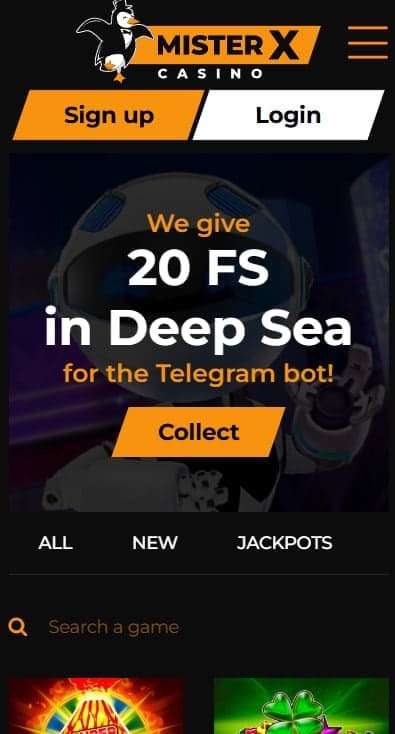
Handset access at this brand routes through two delivery layers — a responsive HTML5 site loaded inside any modern phone browser, alongside a sideload-only Android installation package distributed through operator-adjacent channels. The App Store and Google Play both restrict real-money casino downloads across the British market, so iOS users have no install path at all, while Android holders face a choice between the browser route and the APK sideload. We tested the lobby across an iPhone 15, a Pixel 8, plus a budget Samsung Galaxy A15 connected through standard UK carrier networks; the gameplay renders consistently on each device with no functional gap versus a desktop session. Below we walk through what the journey actually looks like on a phone, where it falls short of UKGC-licensed native apps, plus how British readers can extract the smoothest experience from a handset-only setup.
Coverage on this page tracks the practical workflow: opening the lobby cleanly, adding a home-screen shortcut for app-like behaviour, what shifts versus desktop play, performance under weaker mobile signal, security caveats around the APK file, plus the cashier and verification sequence on a small screen. Every observation reflects browser-based testing across UK-region handsets connected through real cellular networks rather than a development environment.
| Access Path | How It Works | Best Suited For |
|---|---|---|
| 🌐 Mobile Browser Session | Open Safari, Chrome, Firefox, or Edge and load the operator URL — no install step required | Casual players, infrequent visitors, plus anyone preferring to avoid additional storage commitments |
| 🏠 Home-Screen Shortcut | Add a bookmark through the share menu — launches the lobby inside a dedicated tab with one tap | Regular players who want fast access without committing to a full installation |
| 📲 Android APK Sideload | Operator-adjacent channels distribute an Android-only installation package — requires enabling "install from unknown sources" inside device settings | Android users comfortable evaluating APK security; iOS holders cannot follow this route at all |
Worth flagging up front: the third option carries security trade-offs the browser path avoids entirely. We will cover those in detail further down because they matter. For most readers the second approach — a home-screen shortcut over Safari or Chrome — delivers everything practical without any of the sideload-related exposure.
This approach delivers near-app behaviour without invoking any installation step. Tapping the icon takes you straight to the lobby with one gesture. Safari handles session-cookie persistence, KYC document uploads via the device camera, plus streamed-room audio routing without anything extra needed. The browser address bar remains visible at the top, which is the principal visual difference compared with a true standalone app window.
Where your browser detects PWA-compatible markers, the "Add to Home screen" choice may shift to "Install" instead. Selecting that option packages the experience through the Android WebAPK framework, producing something closer to a real application — a dedicated task-switcher entry, separate storage allocation, plus a standalone window that hides the browser interface. Compared with sideloading the third-party APK file, this route skips the "unknown sources" security toggle entirely because nothing installs outside Chrome's own sandbox.
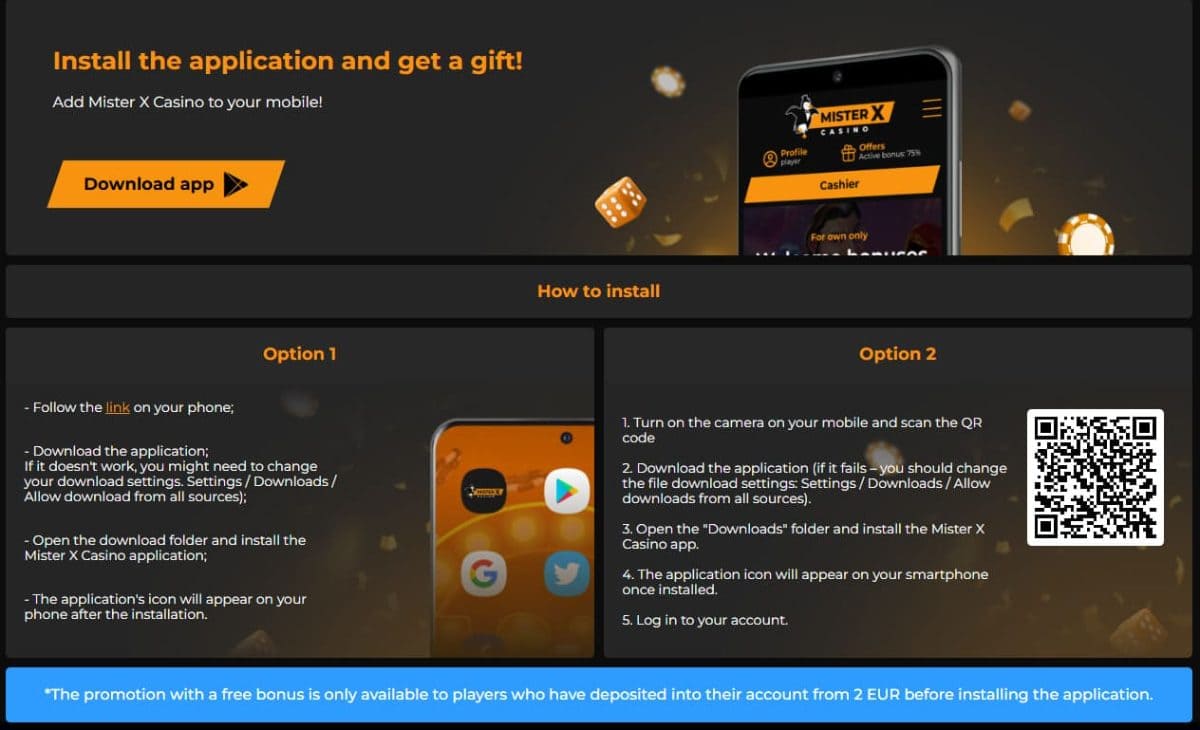
Operator-adjacent channels reference an APK download for Android sideload installation. The marketing copy frames this as a faster, more convenient way to access games, with the device homepage gaining a fresh icon once installation completes. We want to flag the security implication clearly because it matters: while the file appears to originate from brand-connected distribution, third-party APK ecosystems across the offshore market have a long history of harbouring tampered binaries. Keyloggers, credential harvesters, plus modified clients designed to redirect deposit traffic all surface inside that segment. Files distributed through unofficial mirrors carry genuine risk even where the apparent source looks legitimate.
The installation flow itself works through a sequence we observed across operator documentation:
Our recommendation is straightforward. Where you want app-like behaviour on Android, use the PWA install or home-screen shortcut path described in the previous section — both routes deliver identical gameplay without enabling sideload permissions on your handset. Readers who feel comfortable evaluating APK signatures, verifying SHA-256 hashes against operator-published values, plus configuring per-app permissions can make their own informed call. For everyone else: skip the package, take the browser route, add a shortcut to your home screen.
| UKGC-Licensed Native App | Mister X Mobile Browser Experience |
|---|---|
| Distributed through App Store and Google Play with platform-level security review | Browser-only delivery (iOS) plus sideload APK (Android) outside any platform review process |
| Push notifications integrated through the device OS for promotional and account alerts | Notifications limited to email plus in-browser session prompts where supported |
| Affordability prompts and deposit caps surface as platform-level alerts under UKGC obligations | Self-set deposit limits available, but no mandatory affordability assessment layer |
| GamStop status checked against every login attempt | No GamStop integration — Curaçao authorisation sits outside the scheme |
| UKGC-supervised dispute path through IBAS, eCOGRA, or ProMediate | No ADR access — disputes route through Curaçao channels rather than a British arbitrator |
| Slot stake limits and game-feature restrictions enforced at the platform layer | Curaçao framework does not impose the same product-design ceilings |
| FaceID, TouchID, or fingerprint unlock integrated through OS APIs | Browser-stored credentials only; biometric authentication operates through the device password manager rather than the casino itself |
None of these gaps prevent the mobile experience from functioning. They do, however, define the regulatory backdrop a British reader inherits by using a Curaçao-permitted venue rather than a Commission-licensed peer. Readers who want the platform-level protections will need to choose elsewhere; readers who accept the trade-off should at least make the call with the gaps mapped out clearly.
Slot reels load inside two to four seconds across the testing devices we used on a UK 4G connection. WiFi sessions feel near-instant. Live dealer streams pull the heaviest data load: around 50–80 MB per hour at the default resolution setting, climbing past 150 MB per hour where HD quality is selected manually. Most live tables offer a quality toggle inside the stream controls — dropping to standard definition during peak hours can preserve a noticeable amount of mobile data allowance for readers on metered plans.
Battery drain mirrors typical mid-tier gaming-app patterns. Continuous live-table sessions consume roughly 12–18% of phone battery per hour on the iPhone 15 and Pixel 8 we tested with screens at default brightness. Background play is not possible because pausing the browser tab halts the streamed feed — a difference worth noting if you tend to multitask across apps during longer sessions.
Performance on weaker signal areas is honest. Slot games drop to a frozen-frame state during temporary network gaps and resume cleanly once connectivity returns, with bet credits preserved across the interruption. Live tables disconnect immediately and require a manual rejoin — the underlying stream is unforgiving toward variable bandwidth. We would recommend reliable WiFi as the better venue for any live-table session rather than relying on cellular coverage that may dip in and out.
The deposit form renders cleanly across handsets, with each funding method presenting its own input flow. Card payments require the standard 16-digit number, expiry, and CVV inputs alongside billing-address fields. Skrill or Neteller deposits redirect through the wallet's own authentication page before returning to the cashier with a confirmation message. Cryptocurrency funding generates a wallet address plus a QR code — the latter is especially useful on mobile, since you can scan it from a separate device holding your wallet rather than copy-pasting between apps.
Verification through KYC also works inside the responsive site. The flow asks for a passport, driving licence, or national ID image alongside a recent utility bill or bank statement confirming residential address. Capturing both documents directly through the device camera is supported — Safari and Chrome both expose the camera as an upload source inside the file picker dialogue. Quality matters here: blurred images extend processing time and may trigger a resubmission request from support. Aim for full-frame, well-lit photographs with every corner of the document visible.
Verification windows are not consistently published across operator documentation, though references inside third-party listings suggest processing typically runs in hours rather than days when submissions arrive clean and complete. Where your account remains in pending review beyond 72 hours, contacting live chat is the right next step — the support team can flag the queue position alongside any specific document concerns.
No. Apple restricts real-money casino downloads across the British store, and the brand follows the standard offshore pattern of skipping a native iOS binary entirely. Safari delivers the full lobby through the responsive site; adding a home-screen shortcut produces the closest experience to a true app.
No. Google Play applies equivalent restrictions to real-money gambling apps across the UK market. An Android APK distributed through operator-adjacent channels exists, but it sits outside Play Store security review. Our recommendation: use the PWA install or home-screen shortcut path rather than the sideload route.
Yes. Evolution rooms (Lightning Roulette, Crazy Time, Monopoly Live, Immersive Roulette, plus standard blackjack and baccarat rotations) plus tables from Pragmatic Play Live, Ezugi, and TVBet all stream cleanly to a handset. Minimum stakes open at £0.50 across most rotations during standard hours. WiFi delivers a smoother live session than 4G — the streamed feed disconnects immediately on signal dips and requires a manual rejoin.
Yes. Both Safari and Chrome expose the device camera as an upload source inside the file picker dialogue, which means a passport image or utility-bill photo can be captured directly without transferring to a desktop. Full-frame, well-lit photographs process faster than partial or blurred submissions.
Slot gameplay sits at modest data levels — roughly 5–15 MB per hour at default settings. Live dealer streams pull substantially more: around 50–80 MB hourly at standard quality, climbing past 150 MB at HD. The quality toggle inside the stream controls is your tool for managing data on a metered plan.
Yes. The cashier generates a deposit address alongside a QR code on the confirmation screen. Scanning the QR from a separate device holding your wallet is materially easier than copy-pasting between apps and avoids transcription errors that can otherwise misdirect funds.
Slot games preserve the active spin across reconnection and continue from the same state once you return. Bet credits remain intact through the interruption. Live tables, by contrast, terminate the active hand immediately and require a manual rejoin — the streamed dealer floor does not hold a seat across a connection drop.
The site itself does not currently expose a FaceID, TouchID, or fingerprint API. Where your device password manager (iCloud Keychain, Google Password Manager) stores casino credentials, biometric unlock applies at the OS layer rather than inside the casino interface. We would treat this as a minor convenience gap relative to UKGC-licensed native apps where biometric authentication is typically integrated end-to-end.